 ON SALE
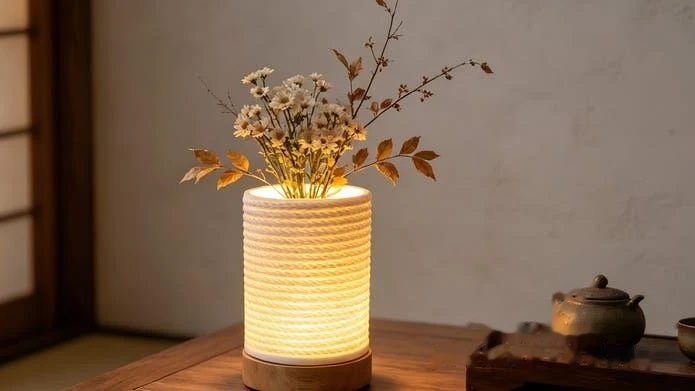
Silent Ripple
Silent Ripple
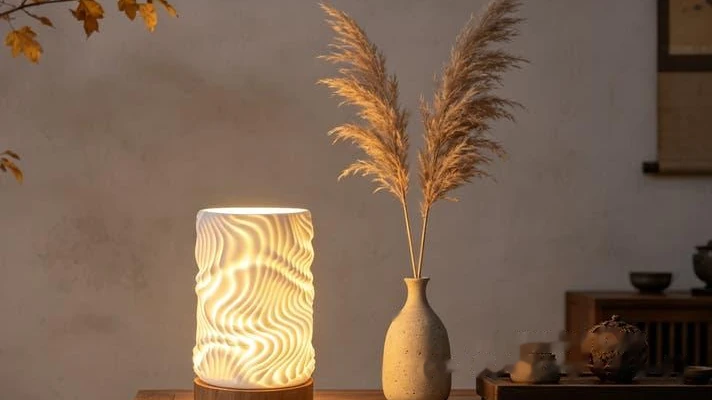
Even horizontal lines with the quiet regularity of ripples on still water. When lit, the shadow spreads outward in soft bands — calm, and slow to leave.
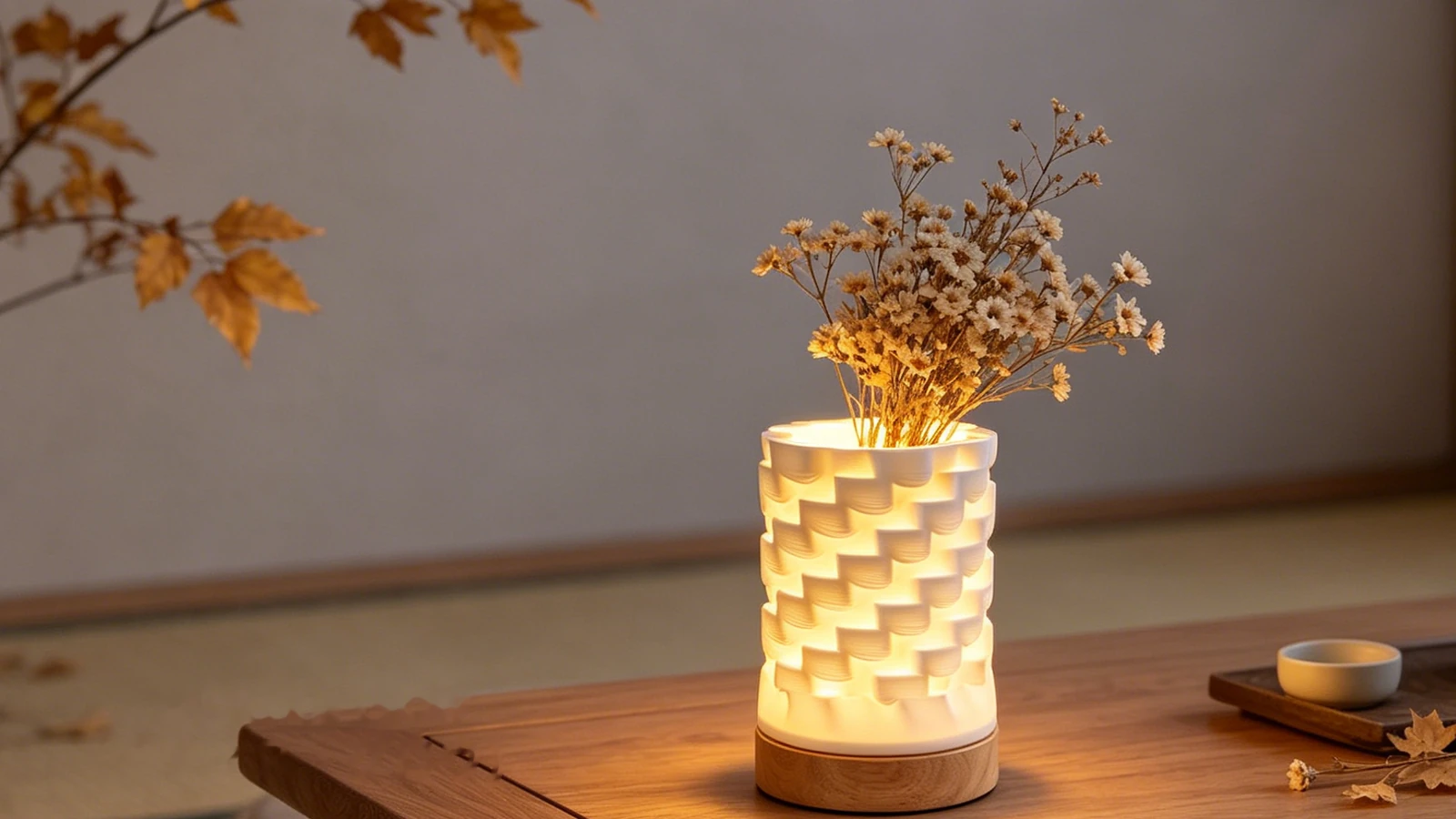
Vessels printed layer by layer from Dehua porcelain clay, fired and finished by hand in Fujian, China. Each piece is a vase by day and a lamp by night.
The Dehua kilns in Fujian, China have produced white porcelain for more than a thousand years. Exported along the maritime Silk Road from the Song dynasty onward, Dehua ware reached Europe under the name that still defines it: Blanc de Chine — the white of China.
Cerapira pieces are made by paste extrusion: real Dehua porcelain clay is pushed through a nozzle and laid down in a continuous coil, layer over layer, following a path generated from a 3D model. Nothing is cast, nothing is glued. What comes off the printer is already the finished form — it then goes through drying, hand trimming, firing and inspection exactly as any other piece of Dehua porcelain would.
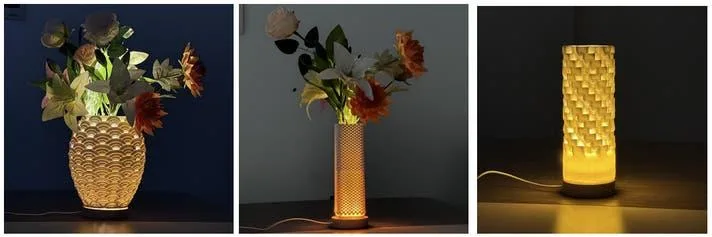
Continuous spirals, undercuts, lattices and walls that vary in thickness from top to bottom. Slip casting needs a form that can leave the mould; printing does not.
The same file produces the same wall, the same rhythm of lines, the same light pattern — across the first piece and the five-hundredth.
A new shape costs a new file, not a new plaster mould. That is what makes short runs, seasonal variants and one-off commissions economically possible.
Trimming, firing and inspection remain human work. Clay shrinks, the kiln has its own opinion — no two pieces come out identical, and we do not pretend otherwise.
 ON SALE
Silent Ripple
Even horizontal lines with the quiet regularity of ripples on still water. When lit, the shadow spreads outward in soft bands — calm, and slow to leave.
 ON SALE
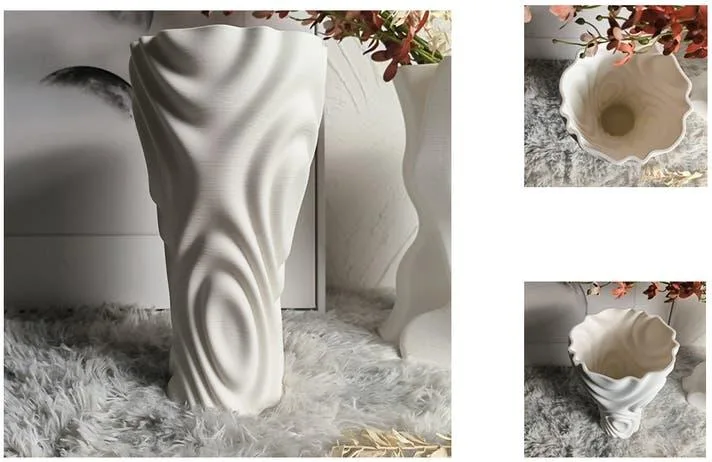
Whispering Clay
Irregular, handmade in feel — as though the clay itself were speaking. The most organic of the six: fluid, soft, unforced.
 ON SALE
Lattice Glow
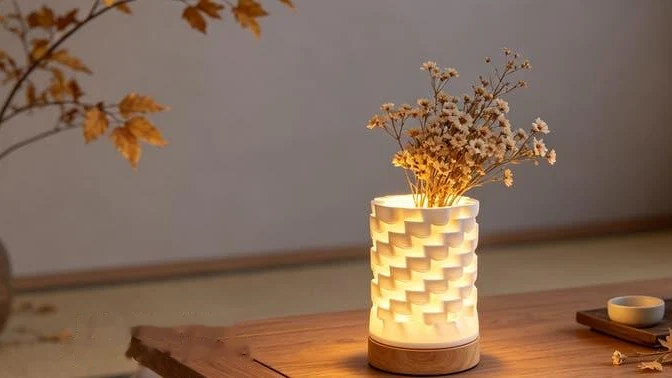
A three-dimensional, regular lattice. The shadow it throws is the point — closer to light through a paper screen than to a lamp.
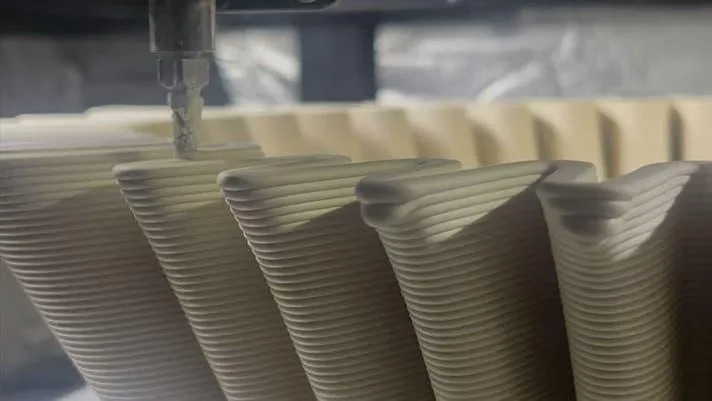
Because nothing is cast in a mould, a new product costs a new file rather than new tooling. That changes what is worth making: fifty pieces for a hotel lobby, a seasonal variant for a lighting brand, a single commission for an artist — all of it is on the table.